
China is a multi-ethnic country with 56 recognized ethnic groups. The largest ethnic group is the Han, which makes up over 90% of the population. The remaining 55 ethnic groups are often referred to as “minority groups”. The Zhuang are the largest minority in China with almost 20 million members, to which I belong. However, the Zhuang people have lived in close proximity to the Han Chinese for many centuries and have intermarried with them over time. This has led to a blending of physical characteristics and a reduction in visible differences between the two groups. So virtually we Zhuang people are indistinguishable from Han Chinese. However, we Zhuang people do have our own traditional clothing that is distinct from that of the Han Chinese, although it may not be as commonly worn in modern times. As a Zhuang people, wearing a well-designed has always been something I would like to do in my life time.
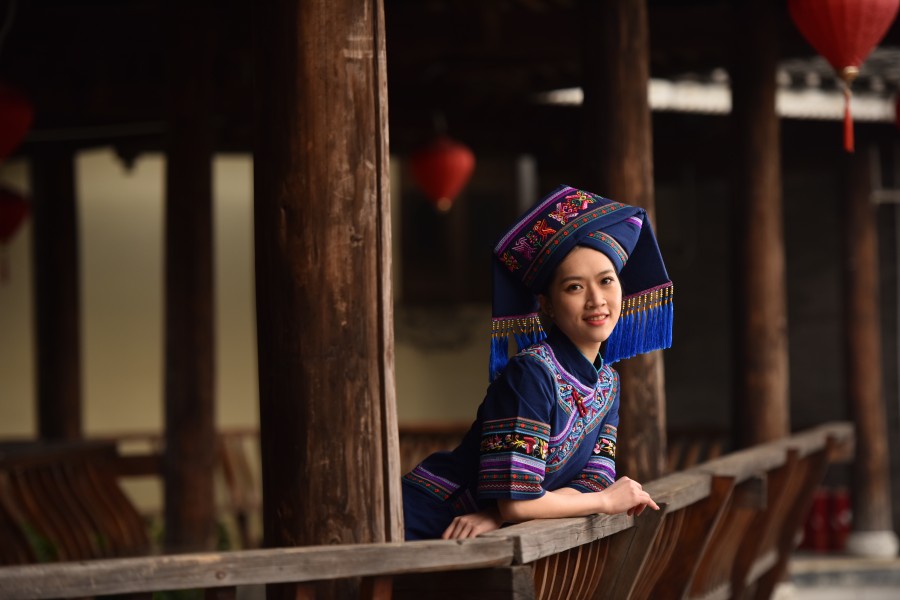
I come across a photography studio specializing in Zhuang traditional cloth shooting. They cooperate with a professional handmade traditional Zhuang cloth workshop. In modern times, Zhuang people wear the same as the Han Chinese, but traditional clothing may still be worn for special occasions, such as festivals, weddings, and other cultural events. The owner of the workshop claims they are the cloth provider for most of those events. Their products do look very beautiful and intricate, with vibrant colors, delicate embroidery, and unique designs. Many people find it to be visually stunning and appreciate the intricate details and craftsmanship that goes into making each piece.
When I were picking the cloth, I started to get to know it more. Traditional Zhuang clothing is known for its intricate embroidery, which often features a variety of patterns and motifs that are unique to Zhuang culture. Zhuang embroidery often includes intricate geometric patterns, such as squares, diamonds, and circles. These patterns are often symbolic of harmony and balance. The flowers are often embroidered in bright, vivid colors and are symbolic of happiness and good fortune. Dragonfly and phoenix are another common motif in Zhuang embroidery, and they are often seen as symbols of good luck and happiness. The patterns can be quite intricate, with delicate wings and bright, colorful bodies. There are also contemporary designers who incorporate new patterns into their designs for Zhuang-inspired clothing.
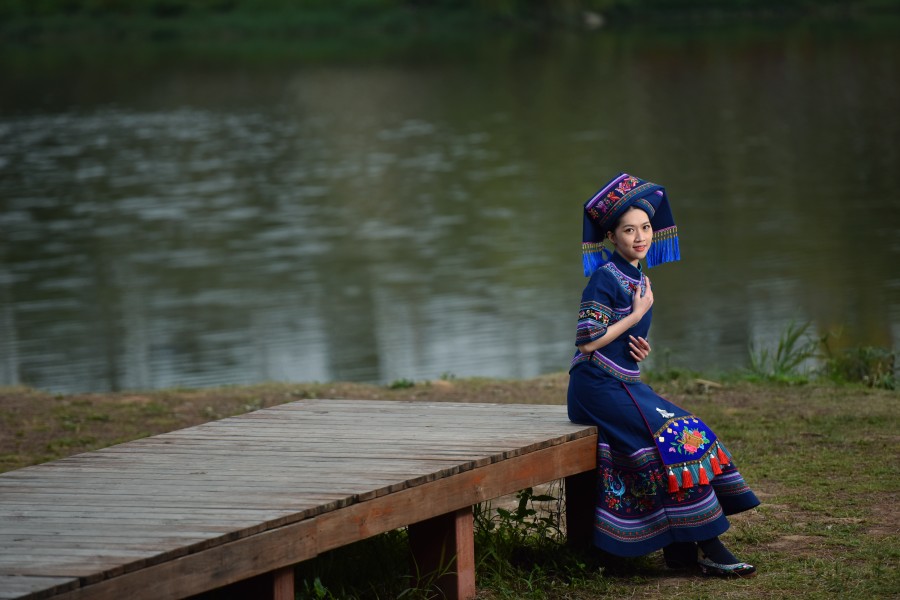
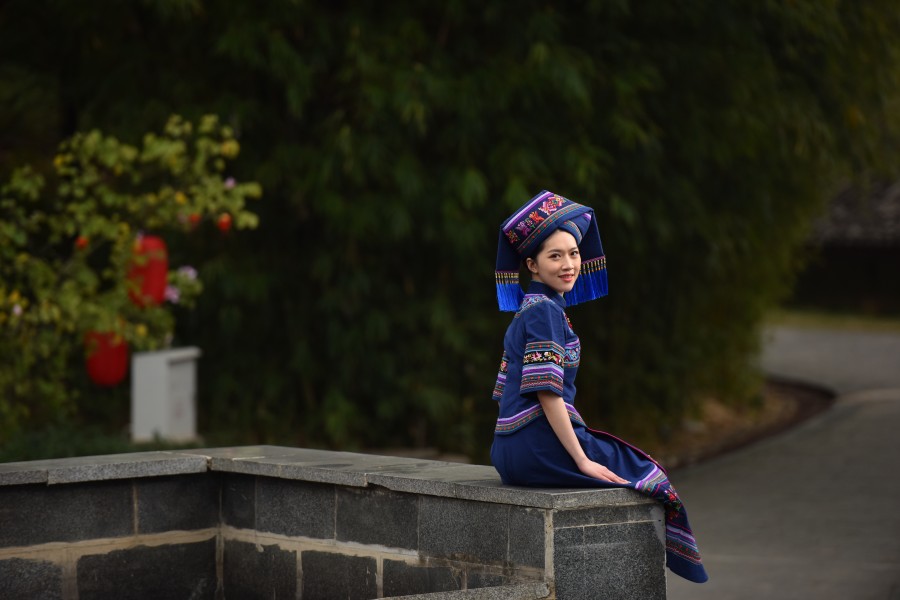
In the end, I chose a Zhuang classic dark-blue color with a minimalist design, just so the whole set looks a bit more chic. It still contains very intricated pattern, but the geometric shapes and lines look quite clean and simple. The embroidery is mainly purple tone. The limited color palette Of course, the interpretation of specific patterns and motifs is often subjective, and different people may associate different meanings with the same pattern.
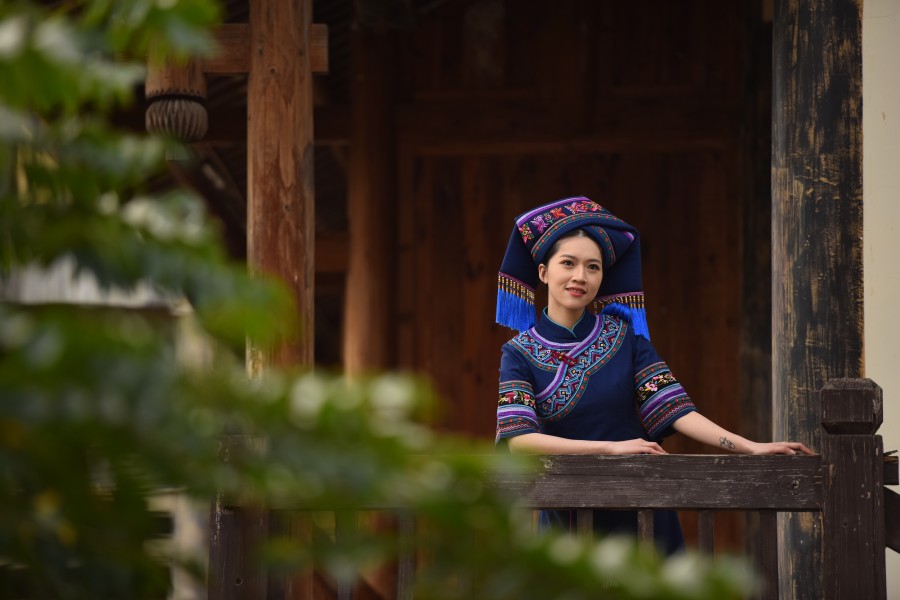
The photo shooting took place in a tourist park. The architecture there styles like traditional Zhuang environment, with bamboo and some wooden houses with tiled roofs. Nowadays more and more people like to take photos in traditional clothing. Except that those intricate and colorful designs can make for striking and interesting photos, wearing traditional clothing can be a way for people to connect with cultural heritage and express pride in the traditions. In a word, it was a quite great experience.